
How Dashcams and Traffic Cameras Help Car Accident Cases in Los Angeles
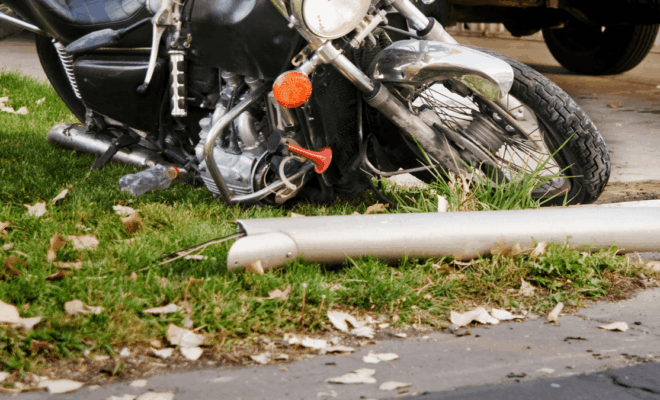
“This article explores how dashcams and municipal traffic cameras provide vital, objective evidence for Los Angeles motorcycle accidents. It details how Los Angeles motorcycle accident attorneys leverage digital footage to overcome “biker bias,” prove liability and secure maximum compensation.”
Los Angeles is a city defined by its transit, but for those on two wheels, the 405, the 101 and the chaotic surface streets of Hollywood are more than just routes they are gauntlets. When a motorcycle accident happens in this city, the scene is rarely clear cut. Between the adrenaline, the injuries and the inevitable I never saw him from the car driver, the truth often gets buried under a pile of conflicting insurance statements.
In a metropolis where every driver is looking for an edge, dashcams and municipal traffic cameras have become the most reliable way to cut through the noise. For Los Angeles motorcycle accident attorneys, this footage isn’t just a luxury; it is the definitive line between a dismissed claim and a recovered future. Objective video evidence effectively silences the he said, she said arguments that typically plague these high stakes legal battles.
Your Personal Black Box: The Power of the Helmet Cam
If you ride in LA, you are likely already aware of the biker bias. Insurance adjusters and even some responding officers often walk onto a scene with the preconceived notion that the motorcyclist must have been speeding or lane splitting recklessly. A dashcam or helmet camera serves as your primary defense against this narrative. It provides a frame by frame account of the moments leading up to the impact the exact seconds that determine legal liability.
When working with motorcycle accident attorneys Los Angeles, having your own footage allows your legal team to prove the specifics of the encounter. Whether it was a left cross at a blind intersection in Silver Lake or a distracted driver drifting into your lane on the Five, the camera is an impartial observer. It doesn’t care about social stereotypes; it only records the physics of the crash and the other party’s negligence.
Navigating California Privacy and Equipment Placement
While California is generally a tech friendly state, there are strict rules to follow regarding hardware. Under the state’s Vehicle Code, you cannot mount a camera anywhere on a windshield; it must be placed in specific seven inch or five inch squares to avoid obstructing the driver’s view. For motorcyclists, helmet mounted cameras are widely used, but the mounting must not compromise the safety gear’s structural integrity.
More importantly, California is an all party consent state regarding audio. While video of a public road is fair game, recording a private conversation without permission can lead to legal hurdles. Skilled motorcycle accident lawyers in Los Angeles know how to audit this data so your evidence remains clean and admissible. They can help separate the visual data from potentially problematic audio, ensuring the core evidence of the collision remains the focus of the jury.
Tapping Into the City’s Eyes: The LA Traffic Grid
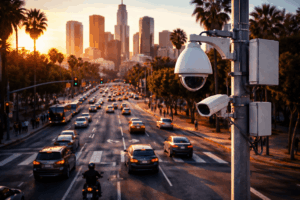
You have seen them at almost every major intersection: those small, white bubbles or cameras mounted high on the signal poles. The City of Los Angeles, through the LADOT and Caltrans, maintains a massive network of cameras to monitor the flow of millions of vehicles. While these are usually intended for real time traffic management rather than law enforcement, they often inadvertently record the very accidents that cause the city’s infamous congestion.
The challenge with this municipal data is the ticking clock. Most city owned cameras operate on a continuous loop, overwriting old footage every few days sometimes in as little as 72 hours. If you wait until you are discharged from the hospital to start looking for this footage, it is likely already gone, deleted by an automated server in a basement downtown.
This is exactly why involving Los Angeles motorcycle accident attorneys immediately is so vital. A lawyer can file a formal spoliation letter or a subpoena to the city or Caltrans, legally forcing them to preserve that specific block of time. You cannot simply call 311 and ask for the tape; you need a legal hook to get the city to stop the overwrite process before your evidence is lost forever.
Proving What the Human Eye Misses
Video evidence does more than just show the crunch of the crash; it tells the story of the why. By looking at footage from a block or two away, motorcycle accident attorneys Los Angeles can often spot a driver’s behavior long before the collision happened. Were they on their phone for the last three miles? Were they weaving aggressively or failing to use signals? This establishes a pattern of negligence that makes a settlement much harder for the insurance company to contest.
The Power of Digital Reconstruction
In many high stakes cases, motorcycle accident lawyers in Los Angeles take this footage to forensic specialists. By syncing your dashcam with a nearby store’s security camera and a city traffic feed, they can build a 3D model of the crash. This takes the guesswork out of how fast was the bike going? and replaces it with mathematical certainty. In a courtroom, a 3D reconstruction based on real world video is significantly more persuasive than a dozen conflicting eyewitness testimonies.
The Double Edged Sword: A Reality Check
It is worth being honest: video evidence is impartial. If you were actually the one at fault, the camera will document that as well. However, California follows a pure comparative negligence rule. This means even if you were determined to be 20% at fault for the accident, you can still recover the other 80% of your damages. An experienced attorney can review the footage and give you a blunt, professional assessment of how a jury will perceive it, ensuring you don’t walk into a legal trap during a deposition.
Furthermore, the chain of custody is paramount. If you upload your footage to social media before it is used in court, the defense may argue that the file has been edited or tampered with. Professional Los Angeles motorcycle accident attorneys will ensure that the original metadata the digital fingerprint of the file is preserved to verify the time, date and location of the recording.
Three Vital Steps to Take Post Accident
If you go down on an LA street and you are physically able to do so, follow this checklist to secure your legal standing:
- Protect the Memory Card: Power down your dashcam and remove the microSD card immediately. If you keep riding or leave the camera on, the loop recording feature might overwrite the crash footage before you even get home.
- Identify Ring and Security Cameras: Most LA neighborhoods are packed with doorbell cameras. If you crashed in a residential or commercial area, take a quick photo of the houses or storefronts nearby. Your lawyer needs to know exactly which doors to knock on to request private footage.
- Hire Representation Early: Do not try to negotiate with the city for traffic cam footage on your own. Reach out to motorcycle accident attorneys Los Angeles who have the investigative staff and the legal authority to freeze that evidence before it vanishes.
Conclusion
In a city of millions, your version of the truth can easily get drowned out by corporate insurance adjusters. Between aggressive drivers and the complex maze of California insurance laws, you need an advocate who knows how to use modern technology to your advantage.
Whether it is a high resolution helmet cam or a grainy security feed from a gas station on Western Ave, that footage is your best chance at a fair shake. Don’t leave your physical and financial recovery to chance. Ensure the digital evidence is working for you by partnering with motorcycle accident lawyers in Los Angeles who understand how to win in the digital age.